
Durable single-ply membrane roofing with excellent resistance to chemicals, grease and exhaust, ideal for restaurants and industrial buildings.
Roof system
PVC Roofing explained
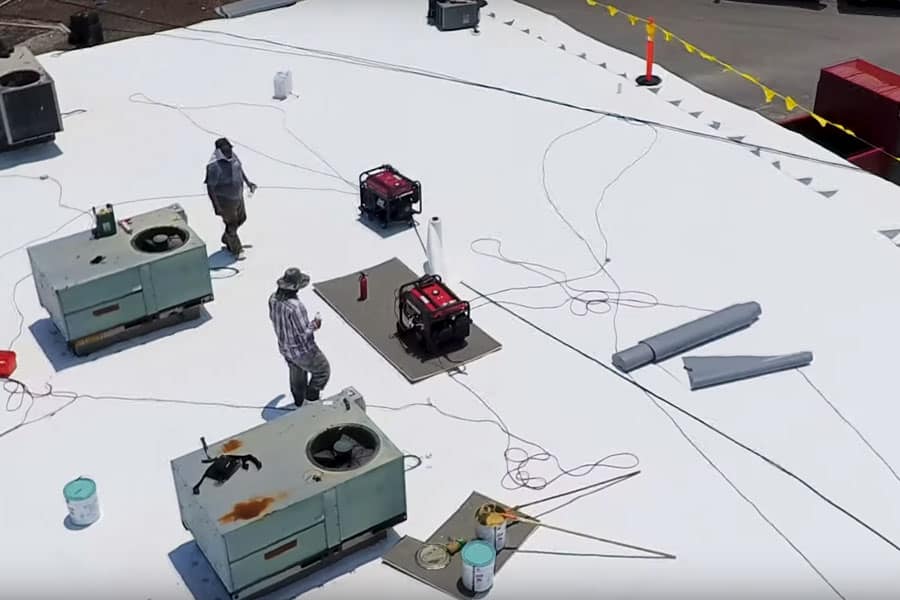
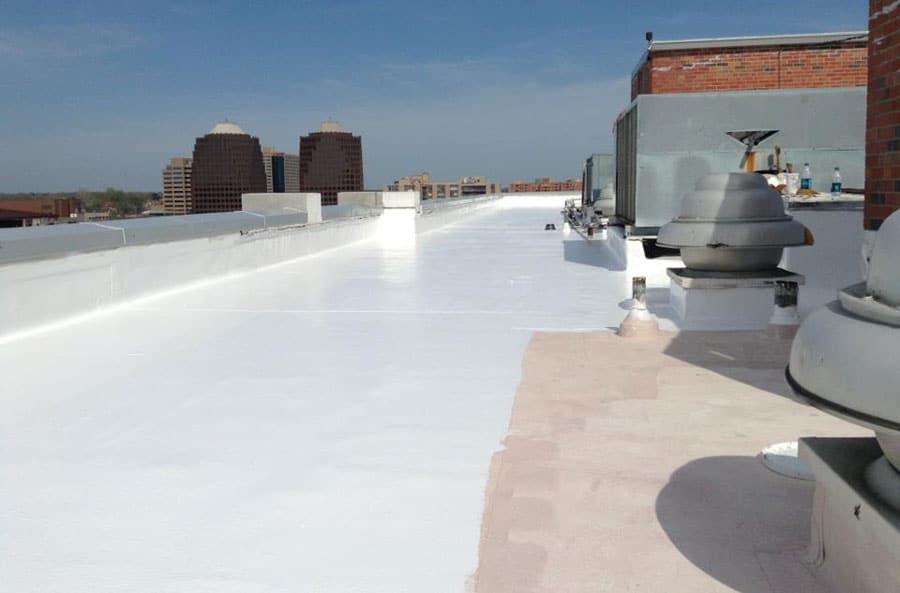
PVC (polyvinyl chloride) membranes install much like TPO: sheets laid over insulation and heat-welded at the seams into a single watertight layer.
PVC stands out for its resistance to oils, grease and chemicals. That makes it a strong choice for restaurants with kitchen exhaust on the roof and for industrial buildings.
Warning signs
When to Call Blackstone
- Grease or chemical staining near vents
- Brittle or cracked membrane
- Open seams
- Ponding water
- Punctures near equipment
- Interior leaks after rain
How we help
What Blackstone Does
New PVC systems
Complete installation with insulation, membrane and flashing.
Repairs
Welded patches and seam repairs that bond to the existing PVC.
Grease protection
Walkway pads and protection around kitchen exhaust fans.
Questions
PVC FAQ
PVC or TPO: which is better?
Both perform well. PVC holds up better against grease and chemicals, while TPO is often more economical for general commercial roofs.
Can PVC be repaired years later?
Yes. Clean, aged PVC can still be heat-welded, which makes repairs straightforward.
Is PVC fire resistant?
PVC membranes are self-extinguishing and are widely used in fire-rated roof assemblies.
Related
Related Services
Talk to Blackstone
Get a Free Inspection
Tell us what is going on with your property. A project manager will follow up with next steps.